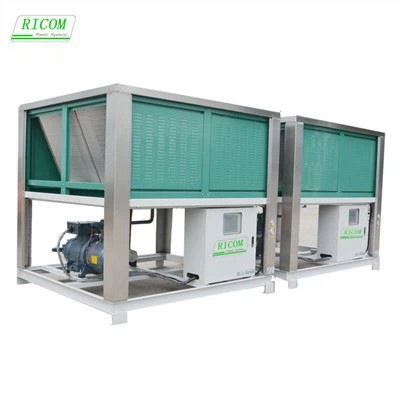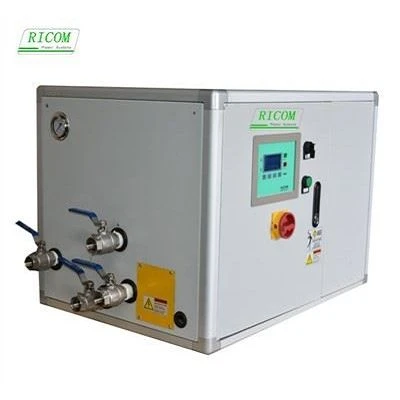
Precision Thermal Control Unit (TCU)
High-Precision Heating and Cooling for Industrial Process Control
A Precision Thermal Control Unit (TCU) is an integrated thermal system designed to heat, cool, circulate, and regulate process fluids within a strict temperature boundary.
Unlike standard controllers that only measure and regulate temperature, a TCU integrates all thermal and hydraulic components needed for fluid conditioning. Depending on process requirements, a unit combines circulation pumps, heating elements, cooling circuits, heat exchangers, precision sensors, intelligent control logic, and safety protections into a single system.
Technical Specifications & Sizing Parameters
|
Parameter |
What to Confirm |
Engineering Impact |
|
Temperature Range |
Min, normal, and max operating temperatures |
Determines fluid choice, heater density, and system design |
|
Temperature Stability |
Required tolerance (e.g., +/- 0.1 °C to +/- 0.5 °C) |
Dictates control response and product consistency |
|
Heating Capacity |
Required thermal power (kW) |
Controls heat-up speed and recovery time |
|
Cooling Capacity |
Required heat dissipation capacity (kW) |
Controls peak heat removal during exothermic or fast cycle times |
|
Pump Flow Rate |
Required fluid flow (L/min or m3/h) |
Maintains fluid velocity needed for high heat transfer |
|
Pump Pressure |
Operating system pressure (bar) |
Overcomes hydraulic resistance in piping, molds, or jackets |
|
Heat-Transfer Medium |
Water, water-glycol, or thermal oil |
Affects viscosity, operating temperature limits, and pump selection |
|
Process Connections |
Port size, connection type (NPT/BSPP), flange rating |
Ensures direct mechanical fit with host equipment |
|
Power Supply |
Voltage, phase, and frequency (e.g., 380V/3P/50Hz, 480V/3P/60Hz) |
Matches local plant electrical infrastructure |
|
Sensors & Control |
PT100 RTD / Thermocouple; PID / PLC control |
Determines measurement accuracy and ramping curves |
|
Communication |
RS485, Modbus RTU/TCP, Profinet, EtherNet/IP |
Enables digital integration into central factory automation |
|
Safety Features |
Over-temp, low fluid level, phase reverse, dry-run protection |
Protects operator, equipment, and batch materials |
|
Compliance Standards |
CE, UL 508A, ISO 9001, DIN/ASME standards |
Guarantees local safety and electrical compliance |
5-Step TCU Selection Guide
Define Temperature Profile: Establish operating limits, stability tolerances, required ramp rates, and process cycle times.
Calculate Heating Load: Determine kW power based on total mass, fluid volume, specific heat capacity, target heat-up time, and ambient losses.
Calculate Cooling Load: Size cooling capacity according to continuous process heat generation, peak transient thermal loads, and available utility water supply.
Verify Hydraulic Circuit: Ensure pump pressure overcomes total friction loss across piping, fittings, internal mold channels, and elevation changes to preserve flow.
Select Heat-Transfer Medium:
• Water (up to 90 °C): High thermal conductivity, cost-effective.
• Pressurized Water (up to 180 °C): High heat transfer for elevated temperatures without oil.
• Water-Glycol: Recommended for sub-zero cooling applications.
• Thermal Oil (up to 300 °C+): Required for high-temperature operations under low working pressure.
Common Selection Mistakes to Avoid
Selecting by Temperature Range Only: Ignoring total kW thermal load requirements.
Underestimating Hydraulic Resistance: Choosing a high-flow pump that fails under high system backpressure.
Ignoring Peak Heat Spikes: Sizing capacity on average heat generation rather than transient load spikes.
Incorrect Sensor Location: Measuring fluid temperature at the TCU outlet rather than inside the critical process load.
Late Control Specification: Leaving PLC communication setup until final equipment commissioning.
Quality Testing & Manufacturing Evidence
Hydrostatic Leak Testing: Fluid circuits pressure-tested at 1.5x working pressure.
Electrical Safety Inspection: Wiring, grounding, insulation, and high-voltage compliance checks (CE / UL 508A).
Operational Performance Simulation: Full heat-up, cool-down, PID response verification, and pump curve testing under real load conditions.
Documentation Package Provided:
General Arrangement (GA) 2D/3D CAD Drawings
Electrical Schematics & Hydraulic P&ID Diagrams
Factory Acceptance Test (FAT) Reports & Inspection Certificates
CE / UL Compliance Declarations
Communication Register Maps (Modbus/Profinet)
FAQ
Hot Tags: precision thermal control unit, China precision thermal control unit manufacturers, suppliers, Precision Industrial Water TCU