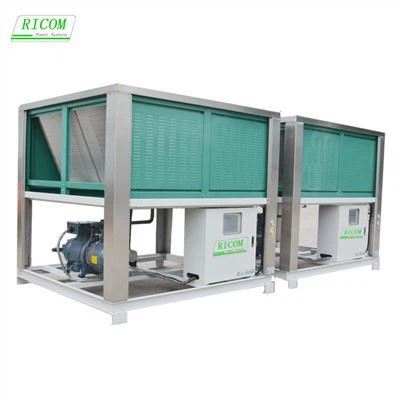
High Precision Mold Water System for Injection Molding
A high precision mold water system heats, circulates, and cools water to maintain a strictly controlled temperature inside an injection mold. The system is essential when your molding process demands repeatable mold thermal dynamics, controlled water circulation, and reliable heat transfer during both startup and continuous production.
Unlike a basic cooling-water circuit, a precision mold water temperature system actively manages circulating water. It delivers rapid mold warm-up during startup and efficiently extracts process heat during high-speed production.
Target Applications & Industry Suitability
Precision Injection Molding: Critical for zero-defect production and tight dimensional tolerances.
Automotive Components: Interior, exterior, and functional structural plastic parts.
Electronics & Electrical: High-density connectors, precision housings, and micro-components.
Medical Plastics: Cleanroom-compatible molding requiring process validation and documentation.
Engineering Plastics: High-performance materials (PA, PBT, POM, PC) requiring elevated, stable mold temperatures.
Complex Mold Designs: Multi-cavity, thin-wall, high-gloss (RHCM), and short-cycle applications.
Why Mold Temperature Stability Matters
|
Process Metric |
Impact of Unstable Mold Temperature |
Impact of Precision Temperature Control |
|
Dimensions |
Thermal expansion variance, part-to-part size drift |
Strict dimensional consistency (+/- 0.05 mm) |
|
Part Appearance |
Sink marks, visible weld lines, uneven gloss |
Superior surface finish, optical clarity, crisp detail |
|
Cycle Time |
Extended cooling times to prevent deformation |
Minimized, highly repeatable cycle times |
|
Structural Integrity |
Internal stress, warpage, and premature cracking |
Uniform stress distribution and material strength |
Flow and Pressure Must Be Evaluated Together
A pump delivers varying flow rates depending on system backpressure. The true operating point is determined by the intersection of the pump curve and total circuit resistance.
Key Factors Increasing Hydraulic Resistance:
Small internal cooling channel diameters.
Long or complex cooling circuit passes.
High quantity of quick-connect fittings, elbows, and manifolds.
Small diameter supply hoses and restrictive inline filters.
Correct Selection Evaluation Formula:
Required Working Flow Rate + Pressure Drop at Mold Circuit + Pump Curve Verification.
Step-by-Step Model Selection Guide
Step 1: Define Mold Operating Temperature - Determine your operating thresholds and precision tolerance (+/- 0.2°C to +/- 0.5°C). High-temperature applications (>95°C) may require a pressurized water system or an oil-based temperature controller.
Step 2: Determine Heating Capacity - Calculate based on mold steel mass (kg), water volume in the circuit, target heat-up time (e.g., 30–45 mins), and ambient losses.
Step 3: Determine Cooling Capacity - Calculate based on plastic material specific heat, total hourly throughput (kg/h), melt vs. eject temperature, and plant cooling water supply conditions.
Step 4: Verify Circuit Hydraulics - Map out cooling channel numbers, diameters, hose lengths, and distribution manifold sizes to ensure the pump overcomes total dynamic head loss.
Step 5: Confirm Plant Utilities - Verify site specifications before ordering: Voltage/Phase/Frequency (e.g., 380V/3Ph/50Hz, 460V/3Ph/60Hz), cooling water supply pressure, and physical space.
System Category Comparison
|
Application Requirement |
Recommended Equipment |
|
Precision water temperature control (10°C to 95°C or pressurized to 180°C) |
Water Mold Temperature Controller |
|
High-temperature thermal control (180°C to 300°C+) |
Oil Mold Temperature Controller |
|
Low-temperature active process fluid cooling (<10°C) |
Industrial Water Chiller |
|
Centralized multi-machine thermal management |
Central Cooling & Distribution System |
Manufacturing & Quality Inspection Pipeline
Incoming Component Verification: Critical pumps, heating elements, sensors, and PLC controllers undergo 100% incoming QC check against specs.
Mechanical & Hydraulic Assembly: High-grade piping with leak-proof fittings, engineered for zero flow restriction.
Electrical Wiring & Control Panel Build: Built to IEC/UL safety codes, featuring clear phase labeling, circuit protection, and noise shielding.
Full Thermal & Hydraulic Testing: System runs under full pressure and thermal load to verify stability, heating/cooling rates, and flow capacity.
Final QA & Safety Inspection: Verification of safety alarms, pressure relief valves, sensors, serial labels, packaging, and export documentation.
Technical Specifications
|
Parameter |
Standard Technical Specification / Option Range |
|
System Type |
High Precision Mold Water Temperature Controller |
|
Circulating Medium |
Water (Deionized / Treated Water Recommended) |
|
Temperature Control Range |
Ambient to 95°C (Standard) / Up to 180°C (Pressurized System) |
|
Temperature Stability |
+/- 0.2°C to +/- 0.5°C (Application dependent) |
|
Heating Capacity |
3 kW to 72 kW+ (Custom sizing available) |
|
Cooling Capacity |
Direct / Indirect Cooling (Engineered to process thermal load) |
|
Pump Configuration |
High-flow, high-pressure magnetic drive or stainless centrifugal pumps |
|
Max Operating Pressure |
Model-dependent (Up to 10 bar for pressurized water models) |
|
Safety Protections |
Over-temperature, low water level, phase reversal, pump overload, pressure alarms |
|
Communication Interface |
RS485 (Modbus RTU), Euromap 66/82, Profinet (Optional) |
|
Power Supply |
Custom voltages available (e.g., 380V/3Ph/50Hz, 460V/3Ph/60Hz) |
|
Certifications |
CE, ISO 9001:2015, IEC Electrical Standards |
What Information to Send for a Quick Technical Quote
|
Parameter Required |
Buyer Input / Example |
|
Application & Plastic Material |
Automotive / PA66 + 30% GF |
|
Required Mold Temperature (°C) |
Min / Normal / Max |
|
Mold Steel Weight (kg) |
Total mold mass |
|
Shot Weight (g) & Cycle Time (s) |
E.g., 150g per shot / 18s cycle |
|
Number of Water Circuits & Size |
E.g., 8 circuits, 3/8" NPT |
|
Local Electrical Supply |
Voltage / Phase / Frequency |
FAQ
Hot Tags: high precision mold water system, China high precision mold water system manufacturers, suppliers, Precision Industrial Water TCU