


Troubleshooting common problems in an air-cooled chiller is a crucial skill for anyone operating or maintaining these systems. As a leading supplier of air-cooled chillers, we understand the importance of keeping your equipment running smoothly. In this blog, we'll explore some of the most common issues you might encounter with an air-cooled chiller and provide practical solutions to get it back up and running efficiently.
Understanding the Basics of Air-Cooled Chillers
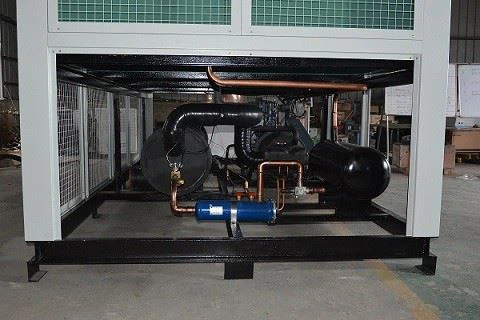
Before we dive into troubleshooting, let's briefly review how air-cooled chillers work. An air-cooled chiller is a refrigeration system that uses air to remove heat from the refrigerant. The chiller consists of a compressor, condenser, evaporator, and expansion valve. The compressor compresses the refrigerant gas, raising its temperature and pressure. The hot, high-pressure gas then flows to the condenser, where it releases heat to the surrounding air. As the refrigerant cools, it condenses into a liquid. The liquid refrigerant then passes through the expansion valve, which reduces its pressure and temperature. Finally, the cold refrigerant enters the evaporator, where it absorbs heat from the process water or air, cooling it down.
Common Problems and Troubleshooting Steps
1. High Discharge Pressure
- Symptoms: The compressor is working harder than normal, and the discharge pressure gauge shows a higher-than-normal reading. The chiller may also be making unusual noises or vibrating excessively.
- Possible Causes:
- Dirty Condenser Coils: Over time, dust, dirt, and debris can accumulate on the condenser coils, reducing their ability to transfer heat. This causes the refrigerant to remain hot, leading to high discharge pressure.
- Insufficient Airflow: If the condenser fan is not working properly or if there is an obstruction blocking the airflow, the condenser coils will not be able to dissipate heat effectively.
- Overcharged Refrigerant: Adding too much refrigerant to the system can cause the pressure to rise.
- Solutions:
- Clean the Condenser Coils: Use a soft brush or compressed air to remove any dirt or debris from the condenser coils. Make sure to turn off the power to the chiller before cleaning.
- Check the Condenser Fan: Ensure that the condenser fan is running smoothly and that there are no obstructions blocking the airflow. If the fan is not working, replace it.
- Verify the Refrigerant Charge: Use a refrigerant gauge to check the refrigerant charge. If the charge is too high, release some refrigerant according to the manufacturer's instructions.
2. Low Suction Pressure
- Symptoms: The compressor is not running efficiently, and the suction pressure gauge shows a lower-than-normal reading. The chiller may also be producing less cooling capacity.
- Possible Causes:
- Refrigerant Leak: A refrigerant leak can cause the refrigerant level to drop, resulting in low suction pressure.
- Clogged Expansion Valve: If the expansion valve is clogged, it can restrict the flow of refrigerant, causing low suction pressure.
- Dirty Evaporator Coils: Similar to the condenser coils, the evaporator coils can also become dirty over time, reducing their ability to absorb heat.
- Solutions:
- Find and Repair the Leak: Use a refrigerant leak detector to locate the leak. Once the leak is found, repair it and recharge the system with the correct amount of refrigerant.
- Clean or Replace the Expansion Valve: If the expansion valve is clogged, clean it or replace it with a new one.
- Clean the Evaporator Coils: Use a soft brush or compressed air to clean the evaporator coils.
3. Compressor Failure
- Symptoms: The compressor stops working, and the chiller is not producing any cooling. There may also be strange noises coming from the compressor.
- Possible Causes:
- Electrical Problems: Faulty wiring, a blown fuse, or a malfunctioning compressor motor can cause the compressor to fail.
- Lack of Lubrication: If the compressor does not have enough lubrication, it can overheat and fail.
- Overheating: Continuous operation at high temperatures can cause the compressor to overheat and fail.
- Solutions:
- Check the Electrical Connections: Inspect the wiring and electrical components for any signs of damage or loose connections. Replace any faulty parts.
- Check the Lubrication Level: Make sure the compressor has enough lubrication. If necessary, add lubricant according to the manufacturer's instructions.
- Improve the Cooling System: Ensure that the condenser and evaporator coils are clean and that the airflow is sufficient. You may also need to install additional cooling equipment if the chiller is operating in a hot environment.
4. Water Flow Issues
- Symptoms: The chiller is not cooling properly, and the water temperature is higher than normal. There may also be a decrease in water flow through the chiller.
- Possible Causes:
- Clogged Water Filters: Over time, the water filters can become clogged with dirt and debris, reducing the water flow.
- Blocked Pipes: Pipes can become blocked due to sediment buildup or other obstructions, restricting the water flow.
- Pump Failure: If the water pump is not working properly, it can cause a decrease in water flow.
- Solutions:
- Clean or Replace the Water Filters: Regularly clean or replace the water filters to ensure proper water flow.
- Flush the Pipes: Use a pipe flushing system to remove any sediment or obstructions from the pipes.
- Check the Water Pump: Inspect the water pump for any signs of damage or malfunction. If necessary, repair or replace the pump.
Importance of Regular Maintenance
Regular maintenance is essential for preventing common problems in air-cooled chillers. By following a preventive maintenance schedule, you can identify and address potential issues before they become major problems. Here are some maintenance tasks you should perform regularly:
- Clean the Condenser and Evaporator Coils: As mentioned earlier, dirty coils can reduce the efficiency of the chiller. Clean the coils at least once a year or more frequently if the chiller is operating in a dirty environment.
- Check the Refrigerant Level: Regularly check the refrigerant level and recharge the system if necessary.
- Inspect the Electrical Components: Check the wiring, fuses, and electrical connections for any signs of damage or loose connections.
- Lubricate the Moving Parts: Lubricate the compressor, fan motors, and other moving parts according to the manufacturer's instructions.
- Test the Safety Controls: Test the safety controls, such as the high-pressure and low-pressure switches, to ensure they are working properly.
Our Air-Cooled Chiller Products
As a trusted supplier of air-cooled chillers, we offer a wide range of products to meet your specific needs. Our Air Chiller is designed for efficient cooling in various industrial applications. We also provide the Explosion-Proof Air Cooled Screw or Piston Chiller for hazardous environments. Additionally, our Air Cooled Industrial Water Chiller is ideal for cooling industrial processes.
Contact Us for Purchase and Consultation
If you are experiencing problems with your air-cooled chiller or are interested in purchasing a new one, our team of experts is here to help. We can provide you with professional advice, installation services, and ongoing maintenance support. Contact us today to discuss your requirements and find the best solution for your business.

References
- ASHRAE Handbook - Refrigeration. American Society of Heating, Refrigerating and Air-Conditioning Engineers.
- Chiller Operation and Maintenance Manuals. Various manufacturers.


