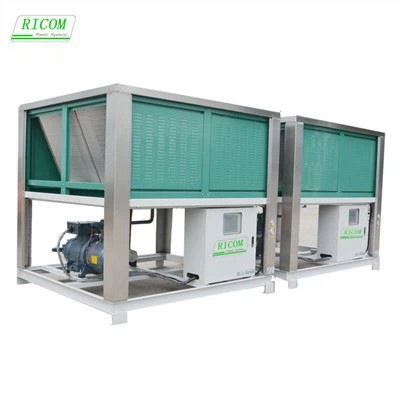
Heavy Duty Oil Heat Transfer Unit: Industrial Thermal Oil Heating
The Heavy Duty Oil Heat Transfer Unit provides precise, controlled process heating via an advanced circulating thermal oil system. Thermal oil is heated in a closed loop and circulated through industrial equipment-such as reactors, tanks, presses, molds, and heat exchangers-transferring heat indirectly while the fluid safely returns for reheating.
System Overview & Closed-Loop Workflow
The system operates as a continuous, isolated closed circuit:
Heater -> Circulation Pump -> Process Equipment -> Return Line -> Heater
This design isolates the heat source from your production line, ensuring uniform temperature distribution and protecting sensitive materials from localized overheating.
Key Industrial Applications
Chemical Processing: Reactors, reaction vessels, storage tanks, and evaporators.
Plastics & Rubber: Heated rollers, calenders, presses, molds, and dies.
Composite Materials: Heated presses, composite molds, laminating equipment, and curing ovens.
Food & Asphalt: Cooking equipment, industrial dryers, storage tanks, and heated pipelines.
Technical Specifications & Procurement Parameters
|
Parameter |
What the Buyer Should Confirm |
|
Heating Capacity |
Total process heat requirement |
|
Operating Temperatures |
Normal supply, return, and maximum upper operating limit |
|
Thermal Fluid |
Fluid type, operating range, and degradation threshold |
|
Oil Flow & Pump Head |
Required circulation rate and total system pressure loss |
|
Process Equipment |
Reactors, tanks, rollers, presses, molds, or heat exchangers |
|
Certifications |
Destination-market compliance (CE, ASME, PED, ISO, etc.) |
|
Electrical Supply |
Voltage, phase, frequency, and control interface requirements |
Thermal Oil vs. Steam Heating Comparison
|
Consideration |
Thermal Oil System |
Steam System |
|
Operating Medium |
Circulating liquid thermal fluid |
Condensing steam |
|
Operating Pressure |
Low pressure at high temperatures |
High pressure required for high temperatures |
|
Water Treatment |
Not required (closed loop) |
Required (boiler feedwater treatment) |
|
Temperature Control |
Extremely precise ($\pm 1^\circ\text{C}$) |
Variable based on steam pressure |
|
Multiple Consumers |
Easily managed via common loop |
Requires extensive steam/condensate piping |
Safety & Expansion Management
Flow & Pressure Monitoring: Low-flow protection prevents overheating and fluid breakdown.
Independent Temperature Limits: High-temperature cut-offs protect against thermal runaway.
Emergency Interlocks: Integrated emergency stops, fault alarms, and automated pump-heater interlocks.
Thermal Expansion Management: An appropriately sized expansion tank and venting arrangement safely absorb volume changes between cold startup and maximum operating temperature.
FAQ
Hot Tags: heavy duty oil heat transfer unit, China heavy duty oil heat transfer unit manufacturers, suppliers, Press Tooling Fluid Temperature Controller