


Hey there! As a supplier of box type air cooled chillers, I've seen firsthand the challenges that come with using these machines in corrosive environments. Corrosion can seriously damage your chiller, leading to costly repairs and downtime. So, I'm here to share some protective measures to keep your box type air cooled chiller running smoothly, even in the harshest conditions.
Understanding the Corrosive Threat
Before we dive into the protective measures, it's important to understand what causes corrosion in a box type air cooled chiller. Corrosion is basically a chemical reaction that eats away at the metal components of the chiller. In a corrosive environment, factors like humidity, saltwater, chemicals, and pollutants can accelerate this process.
For example, if your chiller is located near a coastal area, the salt in the air can corrode the metal parts. Similarly, in industrial settings where there are chemicals in the air or water, the chiller can be at risk of corrosion. Once corrosion starts, it can spread quickly, affecting the efficiency and lifespan of the chiller.
Protective Measures
Material Selection
One of the first steps in protecting your box type air cooled chiller in a corrosive environment is choosing the right materials. When manufacturing our chillers, we use corrosion - resistant materials for critical components. For instance, stainless steel is a great choice for parts that are likely to come into contact with corrosive substances. It has a high resistance to rust and can withstand the effects of chemicals and moisture.
Another option is to use coated metals. We apply special coatings to the metal surfaces of the chiller. These coatings act as a barrier between the metal and the corrosive environment. They can prevent the corrosive agents from reaching the metal and causing damage. Some of these coatings are also designed to be self - healing, which means they can repair minor scratches and maintain their protective properties over time.
Regular Inspections
Regular inspections are crucial for detecting corrosion early. You should have a schedule for inspecting your box type air cooled chiller. Check for signs of rust, discoloration, or pitting on the metal surfaces. Look at the pipes, coils, and the outer casing of the chiller. If you notice any signs of corrosion, it's important to take action immediately.
During the inspection, you can also check the integrity of the coatings. If the coating is damaged, it may need to be repaired or reapplied. You can use non - destructive testing methods, such as ultrasonic testing, to check for internal corrosion in the pipes and components. This can help you identify problems that are not visible on the surface.
Proper Installation
The way you install your box type air cooled chiller can also affect its resistance to corrosion. Make sure the chiller is installed in a well - ventilated area. Good ventilation helps to reduce humidity around the chiller, which can prevent the formation of condensation. Condensation can trap moisture on the metal surfaces, increasing the risk of corrosion.
Also, ensure that the chiller is installed away from sources of corrosive substances. For example, if there are chemical storage tanks nearby, make sure there is enough distance between the chiller and the tanks to prevent any chemical fumes from reaching the chiller.
Water Treatment
If your box type air cooled chiller uses water in its operation, proper water treatment is essential. The water can contain impurities and minerals that can cause corrosion. You should use water treatment systems to remove these impurities. For example, a water softener can remove calcium and magnesium ions from the water, which can reduce the risk of scale formation and corrosion.
You can also add corrosion inhibitors to the water. These inhibitors form a protective film on the metal surfaces in contact with the water, preventing corrosion. However, you need to make sure that the water treatment chemicals are compatible with the materials used in the chiller.
Maintenance of Filters
The filters in your box type air cooled chiller play an important role in protecting it from corrosion. They help to remove dust, dirt, and pollutants from the air or water that passes through the chiller. If the filters are clogged, the airflow or water flow can be restricted, which can lead to increased pressure and temperature in the chiller. This can cause stress on the components and increase the risk of corrosion.
You should clean or replace the filters regularly according to the manufacturer's recommendations. This ensures that the chiller is operating efficiently and that the air and water entering the chiller are clean.
Our Product Range
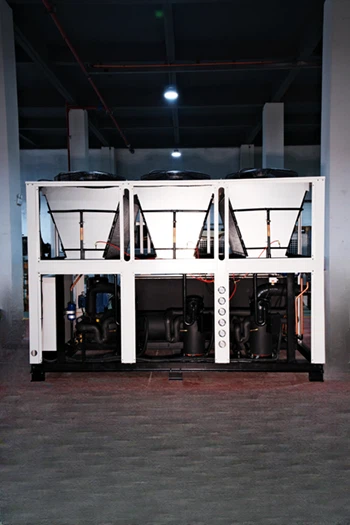
We offer a wide range of box type air cooled chillers that are designed to withstand corrosive environments. Our Box Type Air Cooled Screw or Scroll Water Chiller is a great option for various industrial applications. It uses high - quality, corrosion - resistant materials and advanced manufacturing techniques to ensure long - term performance.
Our Modular Machine is another versatile choice. It can be easily customized to meet your specific requirements, and we can incorporate additional corrosion - protection features based on your needs. And if you need a water - cooled option, our Box Type Water Cooled Screw or Scroll Chiller is also available with excellent corrosion - resistant properties.
Contact Us for Purchase and Consultation
If you're looking for a box type air cooled chiller that can handle corrosive environments, we're here to help. Our team of experts can provide you with more information about our products and the best protective measures for your specific situation. Whether you're in the food and beverage industry, the pharmaceutical industry, or any other industry that requires a reliable chiller in a corrosive environment, we have the solutions for you.
Don't hesitate to reach out to us for a consultation. We can help you select the right chiller and provide you with all the necessary support to ensure its long - term performance.

References
- ASHRAE Handbook of Refrigeration. This handbook provides comprehensive information on refrigeration systems, including chiller design and operation in different environments.
- Corrosion Handbook. It offers in - depth knowledge about corrosion mechanisms and prevention methods for various materials.
- Manufacturer's manuals for box type air cooled chillers. These manuals contain specific information about the maintenance and protection of the chillers.


